





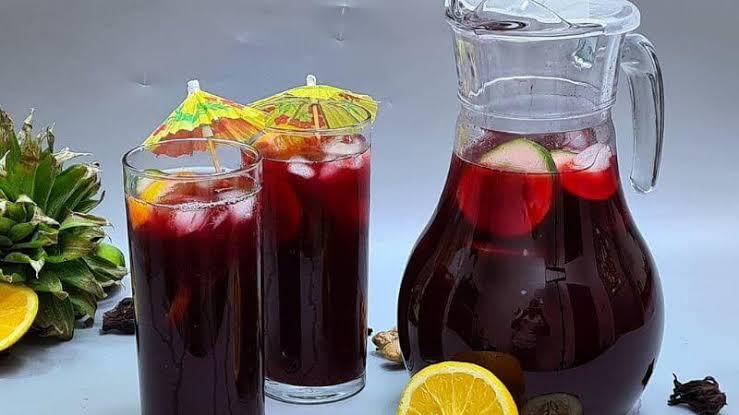
Zobo drink is one of Nigeria’s most popular natural beverages, loved for its vibrant red colour, tangy taste, and refreshing qualities. Whether served at parties, sold by street vendors, or enjoyed at home, this flavourful drink has become a staple across the country.
What is zobo drink?
Zobo drink is a traditional Nigerian beverage made from dried hibiscus petals (commonly called zobo leaves in Nigeria). These petals are boiled with spices and natural flavourings to create a deep red, slightly sour drink that can be sweetened to taste. Globally, hibiscus drinks are known by different names, sorrel (Caribbean), bissap (West Africa), hibiscus tea (International). Despite the different names, the base ingredient remains the same, hibiscus.
Origin and cultural significance
Zobo drink is widely-consumed across Nigeria, but it has strong roots in northern Nigeria, where hibiscus cultivation is common. Over time, it has spread nationwide and become a favourite at weddings and parties, street markets, home gatherings, and religious celebrations. Its affordability and natural ingredients make it a preferred alternative to sugary soft drinks.
Ingredients for zobo drink
To prepare a delicious and authentic zobo drink, you’ll need:
Main ingredient
Dried hibiscus petals (zobo leaves)
Flavour enhancers
Fresh ginger
Pineapple (or pineapple peels)
Cloves (optional)
Sweeteners
Sugar, honey, or dates (to taste)
Optional additions
Orange or lemon juice
Cinnamon sticks
Mint leaves
Step-by-step guide: How to make zobo drink
Step 1: Wash the hibiscus petals: Rinse the dried hibiscus petals thoroughly in clean water to remove dirt or impurities.
Step 2: Prepare your ingredients: Peel and slice the ginger. Cut the pineapple into chunks (You can also use the peels for extra flavour).
Step 3: Boil the mixture: In a large pot, add:
Washed hibiscus petals
Ginger
Pineapple pieces or peels
Cloves (optional)
Pour in enough water and bring to a boil. Allow it to simmer for about 20-30 minutes until the water turns deep red and the flavours are fully infused.
Step 4: Strain the liquid: Remove from heat and let it cool slightly. Strain the liquid using a sieve or cheesecloth to separate the drink from the solids.
Step 5: Sweeten and flavour: Add sugar, honey, or your preferred sweetener. You can also add citrus juice (orange or lemon) for a fresh twist. Stir well until everything is fully dissolved.
Step 6: Chill and serve: Refrigerate the drink or add ice cubes. Zobo is best served cold for maximum refreshment.
Tips for making the best zobo drink
Don’t overboil: Too much boiling can make it overly bitter
Balance the flavours: Adjust sweetness and spice to your taste
Use natural sweeteners: Dates or honey provide a healthier option
Add fruit after boiling: This keeps the flavour fresh and vibrant
Store properly: Keep refrigerated and consume within a few days
Health benefits of zobo drink
Zobo drink is not just refreshing; it also offers several health benefits:
Rich in antioxidants: Helps fight free radicals
Supports heart health: May help regulate blood pressure
Aids digestion: Ginger improves gut health
Boosts immunity: Especially when combined with fruits
Low in calories: When lightly sweetened
Variations of zobo drink
You can easily customise zobo drink to suit your taste:
Fruity zobo: Add strawberries, apples, or watermelon
Spiced zobo: Increase ginger, cloves, or cinnamon
Sugar-free zobo: Use dates or skip sweeteners entirely
Zobo cocktail: Mix with other beverages for a party twist
Why you should try zobo drink
Zobo drink is a perfect blend of flavour, nutrition, and tradition. It’s affordable, easy to prepare, and far healthier than many processed drinks. Whether you’re hosting guests or just need a refreshing drink on a hot day, zobo is always a great choice.
Conclusion
Zobo drink remains one of Nigeria’s most beloved natural beverages for good reason. Its bold colour, tangy taste, and versatility make it a standout drink that appeals to all ages. By following this guide, you can easily prepare your own zobo drink at home and enjoy a refreshing taste of the Nigerian tradition.