



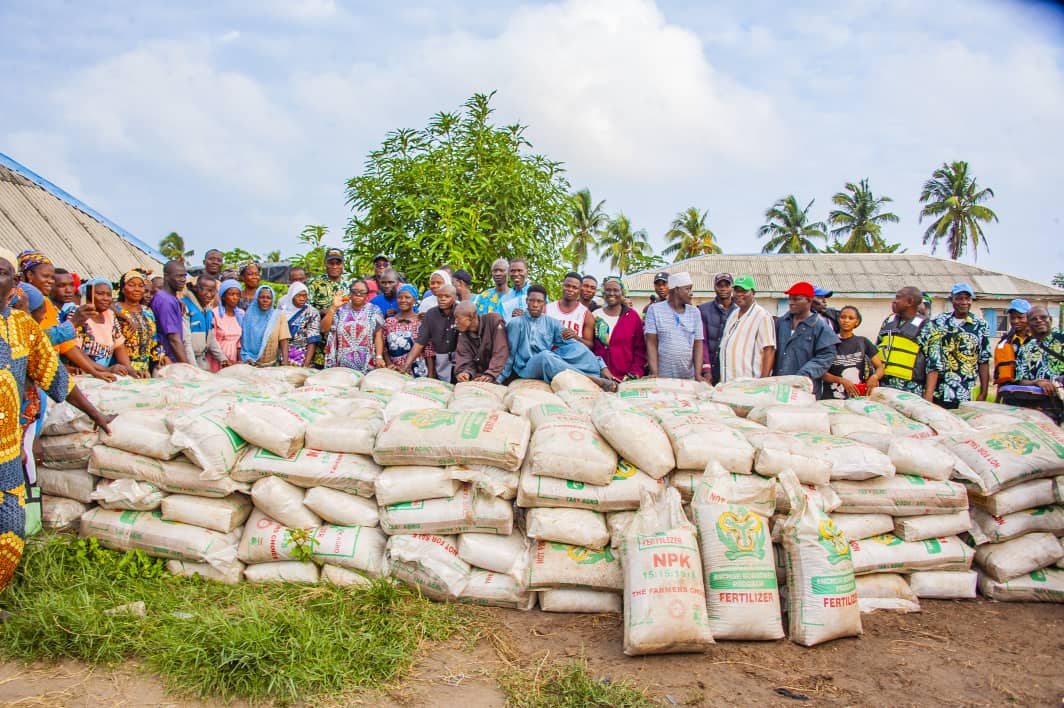
The Federal Government says it has deployed about N250 billion in agricultural credit and released 2.15 million bags of fertiliser to support farmers and boost food production across the country.
The Minister of State for Agriculture and Food Security, Aliyu Abdullahi, disclosed this during an interview, saying the intervention forms part of measures by the administration of President Bola Tinubu to address food security challenges and increase agricultural production. “The policies are very progressive, very functional, and very responsive”, he said.
He added that the government began implementing emergency measures after President Bola Tinubu declared a state of emergency on food security in 2023. “We went straight into action with programmes aimed at boosting production, including the dry season farming programme and the National Agricultural Growth Scheme Agro-Pocket”, he explained.
He added that the government had also adopted an all-year-round farming policy to increase food supply. “We are no longer looking at farming only from the rainy season or dry season perspective. The policy now is all-year-round farming so that crops and commodities can be produced across the entire production cycle”, he said.
Abdullahi noted that food security goes beyond production alone. “Food security is about availability of food, access to that food, and affordability of the same food”, he added.
He said despite concerns about rising food prices, most markets across the country still have food items available. “You will hardly go to any Nigerian market and see that there is no food. The food is available, but affordability is the major challenge”, he noted.
According to him, the government is prioritising key staple crops that have direct impact on food prices. “We have identified crops that are widely-consumed across the country such as maize, rice, wheat, and cassava as priority crops”, he stated further.
He added that tomato, pepper, and onions have been classified as inflation-sensitive crops because of their effect on food prices. “When the prices of tomato, pepper, and onions rise, you immediately see the impact on inflation”, he added.

Abdullahi said the ministry recently intervened to support tomato farmers facing pest attacks. “We worked with the Nigerian Society for Plant Protection and tomato farmers in Kano to identify solutions and distribute items that will help farmers tackle the Tuta absoluta pest”, he said.
On concerns about food importation, the minister informed that the government only opened limited import windows to stabilise supply in critical sectors. “For instance, Nigeria’s maize demand is about 25 million metric tonnes. The importation that was allowed was only a small percentage meant to reduce pressure on the market”, he revealed.
He said an agricultural performance review conducted by the National Agricultural Extension Research Liaison Services indicated a marginal increase in crop production in 2025.
The minister noted that rising costs of farm inputs, particularly fertiliser, remain a major concern for farmers. “The price of agricultural inputs, especially fertiliser, has increased, and this is affecting farmers”, he said.
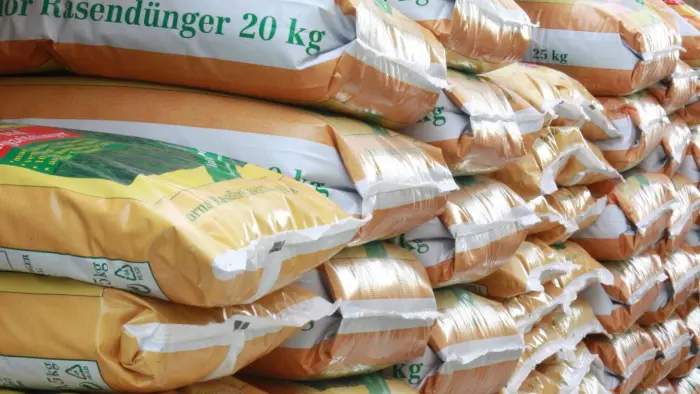
He added that the government released 2.15 million bags of fertiliser from the Central Bank’s Anchor Borrowers Programme to reduce production costs. “That intervention also helped to bring down the cost of production for farmers”, he disclosed.