




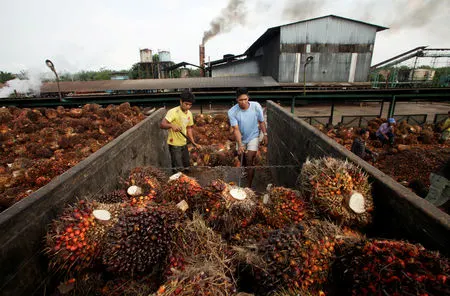
Nigeria is working towards full membership of the Council of Palm Oil Producing Countries (,CPC), as it seeks to strengthen agricultural cooperation and trade relations with Indonesia.
The Nigeria’s Charge d’Affaires ad interim, Eze Thomas, disclosed this while speaking with Nigerian journalists at the Nigerian Embassy in Indonesia, describing the country’s efforts to deepen cooperation with the Southeast Asian nation.
“Nigeria sooner or later will be joining CPC council of producing companies. It’s a great achievement we have made in this mission”, he said.
In February, the Federal Ministry of Foreign Affairs announced that Nigeria had begun consultations to transition from observer status to full membership before its current status expires at the end of 2026.
The council is an intergovernmental organisation that promotes cooperation among palm oil-producing countries, including Indonesia and Malaysia, as it provides a platform for members to coordinate positions on international trade barriers, sustainability regulations and market access.
Nigeria produces about 1.4 million metric tonnes of crude palm oil annually, against domestic demand of approximately three million tonnes, according to figures presented by the ministry in February. The council has also offered Nigeria a two-year waiver of membership fees, if it joins as a full member.
Speaking on Nigeria-Indonesia relations, Thomas said the two countries had maintained cordial ties over the years, but urged Nigerian investors to explore more business opportunities in Indonesia.
He cited Indonesian-linked businesses operating in Nigeria, including Indorama, Indomie, and Primera Food Nigeria Limited, as well as companies in the pharmaceutical, healthcare, oil and gas, and chemical industries.
He said Indonesia offered opportunities for Nigerian businesses in pharmaceuticals, textiles, spices, agricultural products, and manufactured goods.
“Indonesia has really benefited much from Nigeria, more than what we are getting from them. And this is a virgin land. I advise Nigerians to, at least, put more effort into studying their business style”, he said.
The envoy described Indonesian products as competitive in quality, but said investors needed to understand the country’s business culture and build trust with prospective partners.
“They are not like the Chinese that are into risk-taking, you know? Hardly could you convince an Indonesian to just follow you to Nigeria and try business”, he said.
Thomas urged Nigerian participants at the ongoing Trade Expo Indonesia to demonstrate that their businesses were genuine, properly registered, and capable of fulfilling contractual obligations.
He said previous experiences involving fraudulent transactions had made some Indonesian companies wary of dealing with Nigerian businesses.
“So, I advise our investors to find a way to go in, not just talking to them. Find a way to convince them.
”So, tell our investors that they should utilise this government-to-government trade expo and prove to them that their company is duly registered with the Corporate Affairs Commission. Their company could be verified and that they are really willing to do business with them”, he added.
The envoy said Nigeria and Indonesia recorded bilateral trade worth more than US$4.78billion, as of September 2025, adding that both countries had agreed to increase the volume.
He, however, warned Nigerians against travelling to Indonesia without a clear purpose, particularly those lured by promises of employment or business opportunities.
He said employment opportunities for foreigners were limited and that establishing a business could be expensive, urging prospective migrants to verify offers before travelling.
He further lamented the lack of coordination among some Nigerian business groups attending the trade expo, urging participants to work together to advance the country’s commercial interests.
“The purpose of this trade is to see how Nigeria can collaborate with Indonesia in terms of trade, business, and economic growth, but this politics I don’t understand”, he said.
Beyond trade, Thomas urged Nigeria to study Indonesia’s approach to infrastructure development, electricity generation, and public-private partnerships.
He cited Indonesia’s use of coal in electricity generation and its investments in renewable energy, as well as public-private partnership arrangements for roads and other infrastructure.
The envoy said Nigeria could explore similar arrangements to expand electricity supply, improve roads, and attract private investment without relying solely on government funding.
He urged policymakers to ensure that economic reforms and public policies took account of the needs of ordinary citizens.
Thomas said stronger trade relations, improved coordination among Nigerian investors, and greater understanding of Indonesia’s business environment could help both countries expand economic cooperation.