
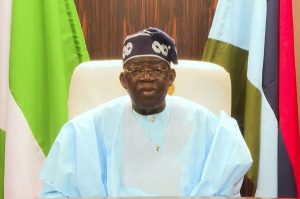


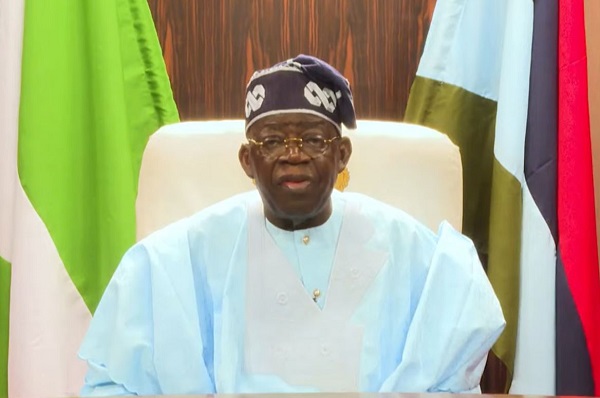
President Bola Tinubu has expressed his determination to ensure that more Nigerian farms feed our cities, supply factory inputs, and doing well in general. The President made the pledge during the address he delivered during the country’s 66th Independence Day national broadcast on October 1, 2026.
According to Tinubu, the nation had endured through the efforts of the farmer, who rises before dawn to work his land, promising to build a country in which “the farmer can cultivate his land safely, produce more at lower cost, and earn a decent return for his labour. A Nigeria in which factories have reliable power, businesses can obtain credit, and young people can find productive work. A Nigeria in which food and transportation are affordable, education is within reach, and hard-working families can look towards the future with confidence. This is the promise we must now fulfill”.
The President defended his administration’s economic reforms and stated that Nigeria had crossed its ‘Red Sea’, saying “Our priority is to bring down the cost of living. We will achieve this by lowering the cost of producing and moving the things Nigerians consume. We have the land and people to feed ourselves. My government is, therefore, focused on expanding mechanised irrigation and dry-season farming, improving access to seeds and fertiliser, holistically increasing mechanisation, and investing in storage and transportation.
“Our logic is simple. When a farmer produces more cheaply, when fewer crops are lost between the farm and the market, when a manufacturer spends less on electricity, when a truck reaches its destination faster, and when the business environment fosters fair competition, all those savings will ultimately find their way into the price of goods in the market. But prosperity requires more than cheaper goods. It requires productive work. Nigeria is a young country. Millions of young Nigerians enter adulthood every year with talent, energy and ambition. Our responsibility is to ensure that this great demographic strength becomes an engine of production rather than a source of despair.
“We are, therefore, placing jobs, enterprise, and industrial growth at the heart of our government’s policies. I want to see more Nigerians making things. I want to see more Nigerian farms feeding our cities and supplying our factories. I want to see Nigerian businesses selling Nigerian goods to the whole world. I want young Nigerians building unicorns and creating opportunities for others here at home. I am also conscious that millions of our fellow citizens cannot wait for tomorrow. Some Nigerian families still struggle today for the next meal, the next school fee, the next medical bill, or simply enough money to get to work. Their circumstances did not begin with the reforms of the last three years. Their struggle is the accumulated consequence of decades of low productivity, inadequate infrastructure, insufficient opportunity and institutions that too often failed those who needed them most”, he stated.
The President reiterated the impact of his administration’s reforms in what he described as his last Independence Day address before next year’s general elections. He likened Nigeria to a cancer patient when he assumed office in 2023, saying only painful treatment would have sufficed. “Sixty-six years ago today, our flag was raised, for the first time, over a free and sovereign nation. Since then, we have journeyed together, as one nation, bound by our collective trust in the great promise of Nigeria: that a country of our size, our bountiful resources, our cultural diversity and, above all, our extraordinary people can build a giant in Africa; that in this blessed and fertile land, we can build a united, strong and prosperous nation; a land of regional authority and global consequence”, he said.
Tinubu further revealed that three-and-a-half years later, the evidence that Nigeria’s economic outlook had improved, is undeniable. He disclosed that the nation’s economy had grown by over 4% this year, while both oil and non-oil sectors have contributed to the renewed period of stable growth. “Inflation has fallen substantially from its peak. Our foreign reserves have been rebuilt, our foreign exchange market has stabilised, and in 2025, this country recorded its highest revenue from non-oil exports in its history, exceeding US$6 billion. This is real money being made by real Nigerian businesses. Our destination is in sight. Our foundations are strong. Our direction is clear. So, let us go forward. No looking back”, the President assured.