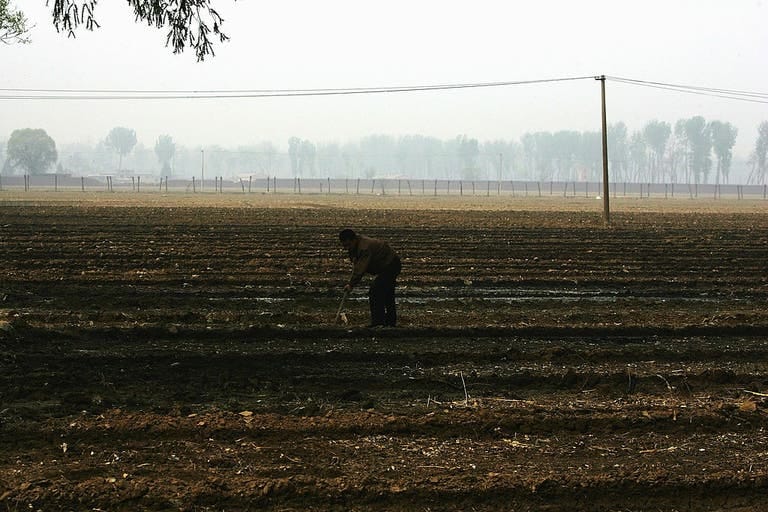
A farmer in China claims to have lost 25 acres of crops overnight after following pesticide advice from an Artificial Intelligence (AI) assistant.
The 67-year-old from Chuzhou in Anhui province had been using artificial intelligence software for a year prior to the incident. According to local report, he has been using it to ask for advice on everything from scheduling to fertilising.
Initial success led to him trusting the AI and blindly following its instructions without confirming the information with other sources.
After asking about the best course of treatment for controlling weeds and pests on sesame crops, the AI suggested a treatment plan that completely destroyed a large field of seedlings.
Agricultural experts attributed the error to a herbicide called flufenacet, which can be harmful to sesame fields if not used in a highly-targeted manner.
“The seedlings were not good, the day after I sprayed them”, the farmer told Taiwanese news site, CTWANT.
“The weeds and seedlings died together, and the seedlings died even faster”.
The unnamed AI app that the farmer used reportedly carried a warning at the top of the dialogue page that stated: “AI generation may be incorrect, please verify”.
Similar disclaimers can be found on popular AI apps like OpenAI’s ChatGPT and Google’s Gemini, though some users have suffered for not double-checking answers provided by chatbots.
Last year, a ChatGPT user developed a rare condition after using it for health and dietary information.
In an effort to remove table salt from his diet, the 60-year-old man replaced it with sodium bromide on the advice of the AI assistant.
After three months of using the chemical in his food, the man developed bromism, or bromide toxicity, and was admitted to the hospital to be treated for psychosis, a common symptom of the syndrome.
An article published in the Annals of Internal Medicine, which detailed the case, warned that artificial intelligence can potentially contribute to the development of preventable adverse health outcomes.
The authors added that AI apps could generate scientific inaccuracies, lack the ability to critically-discuss results, and ultimately fuel the spread of misinformation.
OpenAI has since rolled out an upgrade for ChatGPT that provides better answers for health-related questions, though the company warned that its chatbot is not intended for use in the diagnosis or treatment of any health condition.
 Active journalism costs huge sums of money. To ensure quality and rich agricultural journalism, the support of readers and friends of the publication is required. Donations can be made in Nigerian Naira (NGN). Kindly provide relevant information during transactions and be assured that funds received will be used judiciously and appropriately. For donation to FarmingFarmersFarms, kindly click the link below, call or send message to: +2348095451987.