



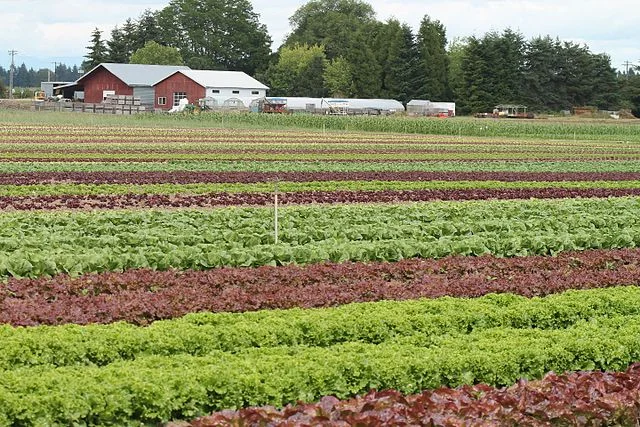
On a 20-hectare greenhouse in Ogun State, 29-year-old Tolu Adebayo monitors soil moisture on his phone while drones spray tomatoes below.
500 kilometers away in Kano, a cooperative of women processes shea butter for export to the United States, and in Benue, tractors move in convoys across land that, a decade ago, was tilled by hand.
These are not isolated stories. They are early signals of what experts say could be Nigeria’s biggest economic shift yet, agriculture moving from subsistence to industry.
With oil revenues uncertain and a population set to hit 400 million by 2050, the question is no longer, if agriculture matters. The question is whether Nigeria can get it right this time. Nigeria spends over US$10 billion annually importing food it can grow, wheat, rice, milk, fish, and sugar. At the same time, 70% of our estimated 250 million people are under 35, and 40% of our land is arable but, underused.
The African Development Bank (AfDB) estimates Africa’s agribusiness market will be worth US$1 trillion by 2030. Nigeria, with its market size, climate, and diaspora, is positioned to take the largest slice, if the fundamentals change. The future farm will look different.
The Federal Government’s Renewed Hope Agenda is pushing mechanisation, irrigation, and agro-processing hubs across the six geo-political zones. Young farmers are leading the tech charge. They use soil sensors, satellite imagery, and WhatsApp groups to track prices.
Agri-fintech firms now lend money based on farm data, not collateral. Cold-chain startups are cutting post-harvest losses that currently waste 40% of fruits and vegetables. “The next green revolution will be digital”, says an agronomist at the International Institute of Tropical Agriculture (IITA), Ibadan. “Youth don’t want to farm like their grandparents. They want to farm like CEOs”.
Raw commodities are volatile. Value addition is where wealth is built. Nigeria’s future lies in tomato paste, not just tomatoes. In yogurt, not just milk. In packaged garri and plantain chips for export, not just tubers for the local market.
The African Development Bank’s US$200 million facility for agro-processing, and private investments in food parks, signal that processors are coming. Meeting United States Food and Drug Administration (FDA) and European Union (EU), labeling standards is now the ticket to premium diaspora and export markets under the African Growth and Opportunity Act (AGOA).
The path is not smooth, insecurity, and attacks on farms, and rural roads have driven rural inflation to 16.36% and scared investors. Unreliable power and bad roads raise production costs and make Nigerian goods less competitive. Foreign exchange volatility and lack of affordable credit still limit scale. Farmers need long-term, single-digit loans. Also, customary tenure and slow approvals delay commercial farming. Cluster farms and documented leases are emerging solutions.
To export, Nigeria must get traceability, food safety, and packaging right. This requires huge investment. The Lagos Chamber of Commerce and Industry says productivity-driven reforms, better infrastructure, coordinated fiscal and monetary policy, and food security are non-negotiable.
Rainfall patterns are shifting. Nigerian Meteorological Agency (NiMet) has projected more extreme weather through 2030, meaning the future belongs to farmers, who adopt climate-smart practices, drought-tolerant seeds, irrigation, insurance, and early warning systems.
Flood-tolerant rice in Bayelsa State, and solar-powered cold rooms in the North. These are no longer pilot projects. They are survival tools.
With an ageing farmer population, Nigeria’s future is young. Programmes by the National Agricultural Land Development Authority (NALDA), Bank of Industry (BOI), and private firms, are training and funding under-35 farmers.
Women cooperatives are dominating processing and aggregation because they control post-harvest handling.
“The farm is the new startup,” says a 27-year-old catfish farmer in Lagos. “If you treat it like a business, it pays like one”.
Stakeholders agree on three pillars for the next decade:
i. Infrastructure first: Roads, power, and storage to cut costs and losses.
ii. Policy consistency: Clear, long-term policies that survive election cycles and allow investors to plan.
iii. Partnerships: government plus private sector plus farmers, plus development partners. No one can do it alone.
From potential to performance, Nigeria does not have an agriculture problem. It has an execution problem. The demand is here. The land is here. The people are here.
The future of Nigeria’s agricultural sector will not be decided in Abuja alone. It will be decided in greenhouses in Ogun, in rice mills in Kebbi, in export warehouses in Lagos, and on the phones of young farmers checking market prices at 5am. If insecurity is tackled, if power and roads improve, and if finance gets cheaper, Nigeria can stop importing what it grows and start exporting what the world eats.
The next harvest is coming. The only question is: who will be ready to reap it?