



Experts have identified Nigeria’s rich biodiversity conservation and its ecosystems, as crucial to global environmental health and support key sectors like agriculture, water, health, tourism, and industrial development, but also zeroed in on the threats which they face.
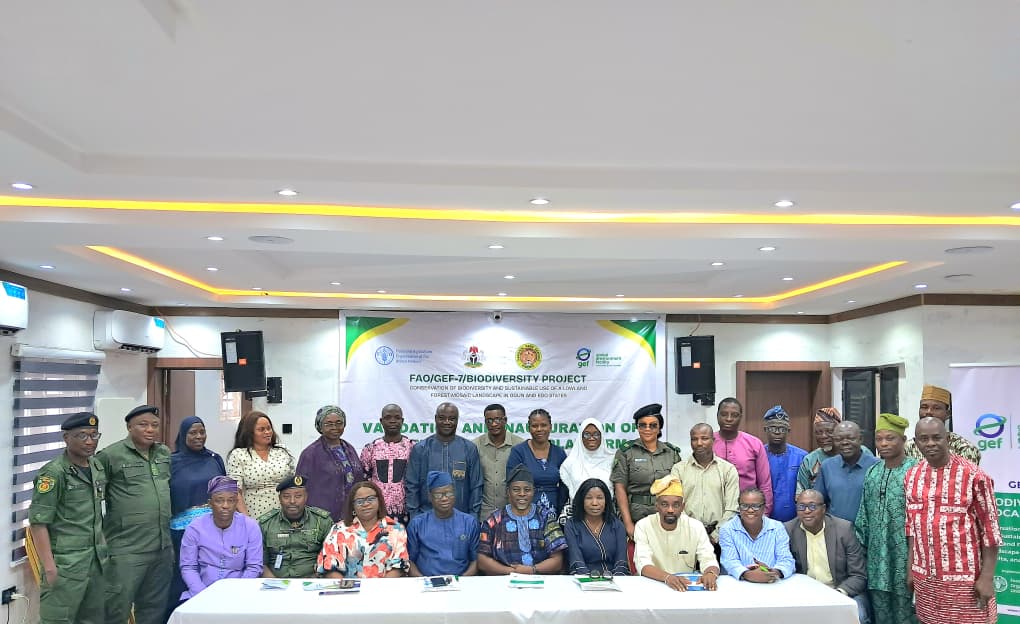
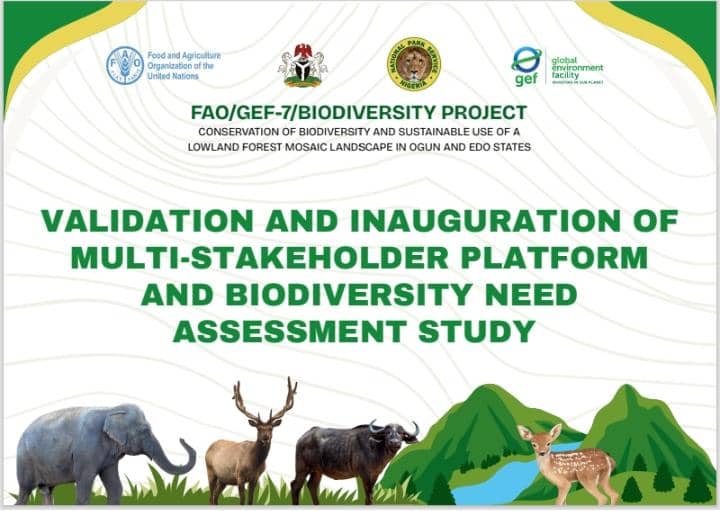
They all spoke during the Validation and Inauguration of Multi-Stakeholder Platforms and Biodiversity Need Assessment Study on Conservation of Biodiversity and Sustainable Use of Lowland Forest Mosaic Landscape in Ogun and Edo States.
It was organised by the Nigeria National Park Service in collaboration with the Food and Agriculture Organisation and Global Environmental Facility-GEF 7 Project.
The event, launched a GEF-7 Biodiversity project, is aiming to conserve Nigeria’s lowland forests and boost local livelihoods.
In his paper, the Chief Technical Adviser for Global Environmental Facility, GEF-7 project, Prof. Segun Oladoye, said while presenting an overview of GEF-7 Biodiversity Project in Nigeria at the event, he noted that Nigeria’s rich Biodiversity conservation and its ecosystems are crucial to global environmental health and support key sectors like agriculture, water, health, tourism, and industrial development.
He said, according to National Strategy to Combat Wildlife and Forest Crime in Nigeria, 2022 and 2026, Nigeria has some of the richest flora and faunal Biodiversity in Africa, saying the country’s wide variety of ecosystems, ranging from semi-arid savanna in the North and lowland rainforest across the Niger-Delta region in the South, host over 864 bird species, 117 species of amphibians, 203 reptile species, over 775 fish species, 285 mammals and over 4,715 plant species.
However, he stated that 309 species are threatened due to habitat loss, unsustainable practices, pollution, and climate change.

Prof. Oladoye said the GEF-7 Biodiversity Project “will focus on integrated planning, conservation, sustainable practices, and knowledge management to protect biodiversity and support communities”.
He added that it would be achieved through the implementation of four key components, which include integrated landscape planning management, implementation of biodiversity conservation and restoration, implementation of sustainable practices and livelihoods in connecting productive areas, and knowledge management and monitoring evaluation.
“The programme focuses on biodiversity for food and agriculture maintained and sustainable use, conservation and restoration of marine, terrestrial, and fresh water ecosystem and that the service would be promoted through the adoption of targeted policies and practices”, he said.
On his part, the GEF-7 National Programme Coordinator, Mr. Lawrence Osaze disclosed that the gathering reflects the shared commitment to strengthen collaboration and ensuring inclusive participation in the sustainable management of biodiversity resources, saying that the validation process provides an opportunity to review and refine the strategies, while ensuring that they are practical, relevant and aligned with national priorities and community needs.
He added that the event inaugurated a multi-stakeholder platform to drive dialogue, knowledge sharing, and collective action among government, communities, civil society, and private sector.
“Through this platform, they aim to promote transparency, enhance ownership and foster partnerships that will drive effective implementation and long term sustainability of project outcomes, while encouraging all stakeholders to actively participate, share their expertise, and work together towards the common goal of conserving biodiversity while supporting sustainable livelihoods”, he stated.
Presenting a paper Titled: ‘Best Practices for Biodiversity-Friendly Production the Significance of Sustainable Production Practices and Alternative Livelihoods’, a Professor from the Forestry Research Institute of Nigeria, Ibadan, Tayo Oyelowo explained that biodiversity-friendly production refers to system and practices that actively support, protect, and restore the variety of life at genetic, species, and ecosystem levels while producing goods like food, fibre and timber, saying these methods focus on harmonising production with natural systems rather than working against them.
He added that sustainable environmental practices would ensure environmental protection, biodiversity conservation, economic stability, climate change mitigation and adaptation and community development while maintaining that agro-forestry based system would increase soil fertility, enhance carbon sequestration, feed supply for animals and increase on-farm tree diversity.
“Land and sea use change, pollution, species over-exploitation, climate change and invasive species and disease are threats to biodiversity”, he stated.
Oyelowo said, “Biodiversity is the variety of all living things on earth. It encompasses the vast array of plants, animals, fungi, and microorganisms, as well as the genetic differences within each species and the complex ecosystem they form”.
Also, presenting a paper on ‘Practical Guide for Integrating Gender and Inclusion in MPS’, Mrs. Lydia Ameh said gender inclusion would improve sustainability and resilience, resources management, livelihoods, and community ownership, adding that “women hold indigenous ecological knowledge”.
She said gender inclusion “is critical, as it would ensure fair distribution to all community members, improve decision-making quality and creativity, boost commitment to development projects and strengthen mutual trust and solidarity”.

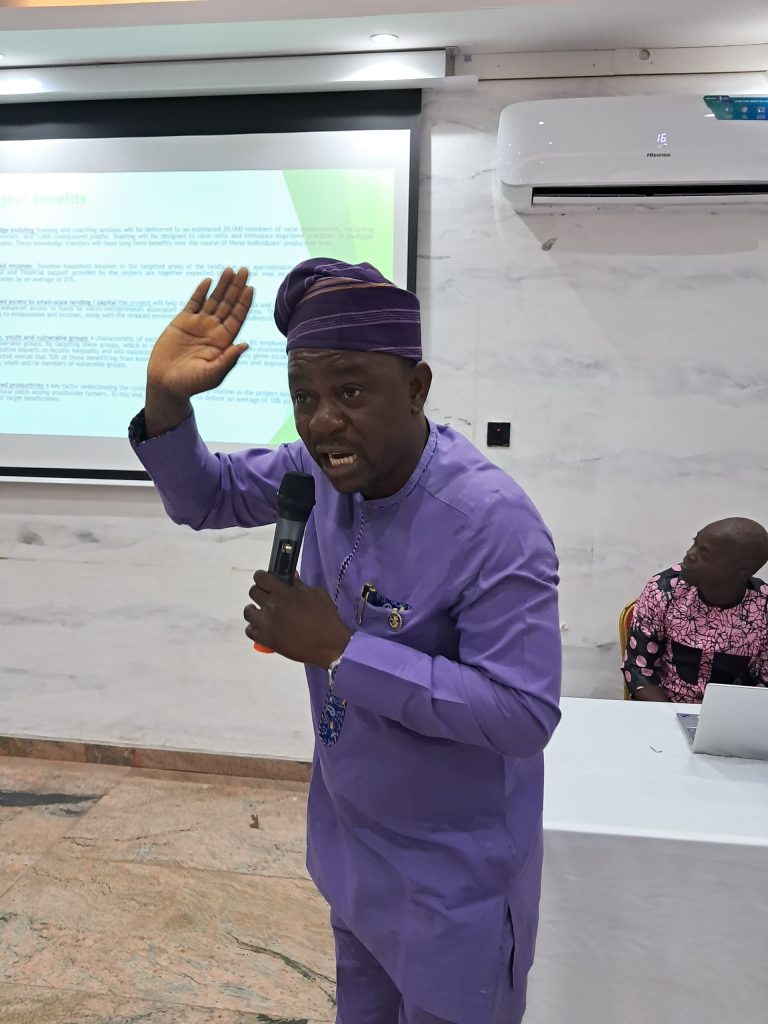
Reeling out some of the opportunities for gender mainstreaming, the expert said it would support women-led enterprises in non -timber forest products and agroforestry, promote high-value livelihoods activities, expand women’s access to markets and financial services, provide adult literacy and leadership development programmes for women, and establish and strengthen women’s cooperatives among others.
“A collaborative platform involving diverse stakeholders, ensure gender equality in participation and equal voice decision-making, recognises different roles, knowledge, and needs, promotes fair access to resources, opportunities, and strengthen policy, planning, and evaluation processes, all this is what defines a Gender-Responsive and Inclusive MSP”, she stated.
Speaking on Integrated Land Management (ILM), Dr. Ralph Adewoye said Ogun State can lead Nigeria in sustainable forest governance by adopting ILM, noting that ILM is a development strategy, not just conservation.
He urged policymakers to take immediate actions, including approving a unified landscape coordination framework, mandating data sharing, and integrating ILM into State Development Planning, committed to periodic review.
“Ogun is among states with significant remaining moist forest block, covering 9-10 million hectares of Nigeria’s forest area”, Ralph said, calling for a harmonised Land Use and Land Cover baseline.
The Commissioner for Women Affairs, Ogun State, Hon. Motunrayo Adeleye, represented by the Director of Administration and Supply in the ministry, Mrs. Olayemi Osilaja, said there is the need for enlightenment of women on the project, saying “If you train the women, you are as well training the children indirectly”.
“It is a welcome idea, and our ministry appreciates you, but monitoring is key to the success of this project”, she added.
Other guests present at the event include the Permanent Secretary, Ministry of Budget and Planning, Ogun State, representatives from the Ministry of Forestry Ogun State, and Ministry of Physical Planning, among others.