


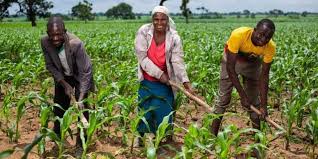
The Federal Government has reaffirmed its commitment to ensuring that farmers are actively involved in policy decisions, as part of a renewed effort to boost agricultural productivity and strengthen national food security in the country.
The Data Manager, Research and Impact Assessment at the Presidential Food Systems Coordinating Unit, Office of the Vice President, Eniola Akindele, stated this at Nigeria’s Sustainable Agricultural Value-Chains for Growth workshop held in Kano.
Akindele said the current administration, under President Bola Tinubu, is prioritising farmer-driven, market-oriented, and results-based agricultural interventions, stressing that policies must respond to realities on the ground rather than follow a top-down approach.
“AGROW focuses on strategic value chains including rice, wheat, tomato, sesame, and sorghum, which are critical to Nigeria’s food security and economic development,” Akindele said.
According to him, AGROW is a US$500 million homegrown initiative, led by Nigeria, co-created across the three tiers of government, and shaped in partnership with the private sector and development partners, with technical support from the World Bank.
The presidential aide explained that past agricultural programmes were hindered by fragmented public spending, blanket input subsidies, government-driven implementation models, opaque land administration systems, and multiple informal trade levies.

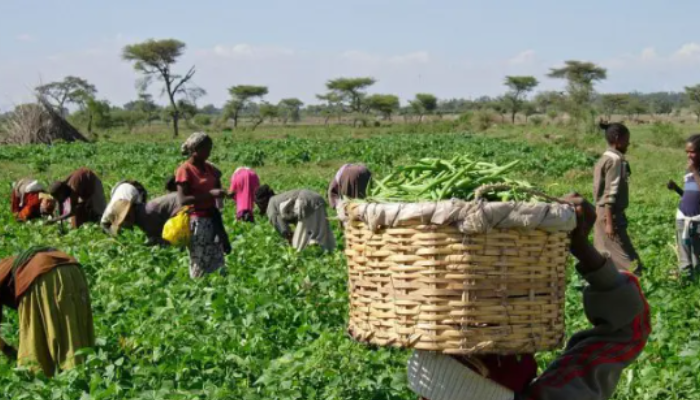
AGROW framework introduces a new approach centred on state-level agricultural support, financial incentives tied to market outcomes, and targeted public investment in the country.
“Other pillars include institutionalised private sector engagement, transparent and secure land administration, as well as efficient and predictable interstate agricultural trade,” he said.
The PFSCU official added that the programme is built on three major components, strengthening private sector linkages with small holder farmers, modernising on-farm production systems, and effective project coordination, monitoring, and evaluation.
He further outlined eligibility requirements for states seeking to participate in AGROW, including sustainable land-based investment processes, digital farmer registries, increased transparency in fees and levies for interstate trade, reduced reliance on input subsidies and stronger support for agricultural cooperatives.
The workshop, with the theme: “Sustaining Growth, Strengthening Value Chains”, brought together stakeholders in the agriculture sector.