






The Central Bank of Nigeria plans to increase agricultural lending above the current level of less than 5% of banks’ credit, with Governor Olayemi Cardoso declaring that agriculture must receive its rightful place in the financial system and national priorities.
Cardoso spoke in Abuja at the inauguration of the newly-constituted board of the Agricultural Credit Guarantee Scheme Fund, and told the audience that the event marked a defining moment, a bold statement of intent that signals a new dawn for agricultural financing in Nigeria.
He said agriculture remained the backbone of the economy, contributing more than one-fifth of Gross Domestic Product (GDP) and employing most Nigerians, and yet, it receives only a small fraction of formal credit, as less than 5% of banks’ lending goes to the agriculture sector.
According to him, this chronic underfunding has stifled productivity and expansion for millions of farmers. “It is a reassessment of norms – we will no longer accept business-as-usual. Instead, we embrace a future where agriculture is accorded its rightful place”, he added.
Cardoso said the fund, which guarantees up to 75% of the value of agricultural loans, had helped banks lend to farmers for decades, including those considered unbankable.
He noted that the scheme had been strengthened following a 2019 amendment that expanded its share capital from N3billion to N50billion and broadened its mandate, saying the reform was designed to deepen inclusivity, while adding that the revised act now provides for a board composed, not only of government officials, but also of farmers’ representatives.
“Such inclusivity is strategic. It enshrines partnership between policymakers, financiers, and the farming community in guiding the scheme’s activities”, the CBN boss said.

Cardoso described the sector as standing at the crossroads of unprecedented opportunity under the Federal Government’s Renewed Hope Agenda.
He revealed that the vision was to build a resilient, technologically-advanced, and inclusive agricultural economy that ensures food security, reduces poverty, and creates wealth for millions of Nigerians.
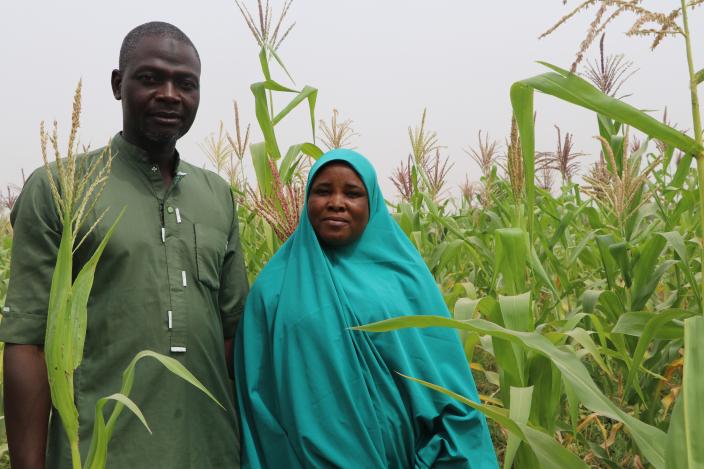
According to him, smallholder farmers constitute 80% of Nigeria’s farmers and produce about 90% of food, yet they continue to face high barriers to credit. “Many lack collateral or credit history, a situation we can no longer afford, given that these same smallholders feed our nation and drive our rural economy”, he said.
On his part, the chairman of the newly-inaugurated board, Dr. Olusegun Oshin, said the scheme must focus on the grassroots, where the majority of farmers struggle without credit or storage facilities.
He told the gathering that those that feed the nation are those weak, poor farmers very far away in the villages, and who do not have access to credit, adding that even when they manage to raise funds, they do not even store it properly because they do not have the capacity for storage.