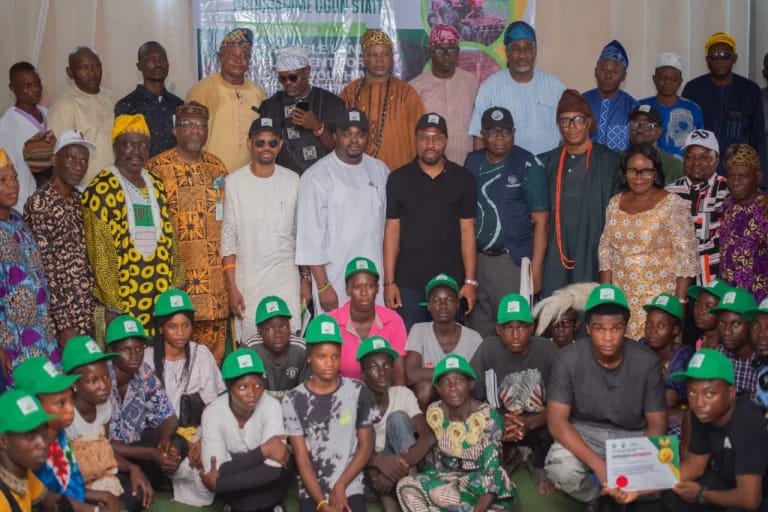
The Special Agro-Industrial Processing Zones Programme, in partnership with the International Fund for Agricultural Development, has trained farmers in the use of the Agricultural Market Information System, in a bid to continually improve the capacity of smallholder farmers.
The initiative is aimed at improving access to real-time information and market data to enhance agricultural productivity.
The training, held in Abeokuta, the Ogun State capital, brought together multi-stakeholder agribusiness forum chairmen, smallholder farmers, cooperative leaders, and agribusiness stakeholders from the SAPZ clusters.
According to the statement, the programme focused on “equipping farmers with practical knowledge on how to access, interpret, and apply market information such as commodity prices, demand trends, weather forecasts, and supply chain updates”.
Speaking at the event, the State Programme Coordinator, Mrs. Kehinde Jokotoye reiterated the significance of the training to farmers’ daily operations, noting that significant resources had been committed to improving their productivity and adding value to their activities.
Also speaking, the National Rural Institution Expert, Mr. Abel Ameh highlighted the importance of the training, describing the AGMIS as a platform developed by SAPZ with the support of IFAD to link smallholder farmers to larger markets.
“The platform enables farmers to upload their commodities for immediate purchase by buyers across different locations, thereby reducing post-harvest losses, adding that the system enhances farmers’ visibility, ensuring that their produce reaches a wider audience”, the statement read.
Ameh noted that “limited access to accurate and timely market data has long been a major challenge for farmers, often resulting in poor pricing decisions and significant losses, explaining that the introduction of the AGMIS platform is expected to bridge this gap by providing farmers with critical insights for informed decision-making”.
FarmingFarmersFarms reports that co-facilitators of the programme, Messrs. Michael Oredola and Gbenga Agbeja of Dolarmicheck, took participants through hands-on sessions on navigating the platform, analysing market trends, and connecting with potential buyers.
The duo emphasised that the system is user-friendly and accessible via mobile devices, making it suitable for farmers in remote areas.
Speaking on behalf of the participants, Mr. Olufemi Oluwaseyi from Ijebu-East and Mr. Timothy Aina from the Obafemi Owode cluster expressed appreciation to the government and IFAD for the initiative, saying that access to reliable market information would reduce exploitation by middlemen and significantly improve their bargaining power. They added that the training had opened their eyes to better planning and smarter selling strategies.
The Knowledge Management and Communication Officer, Mrs. Damilola Akindele, reiterated SAPZ’s commitment to continuous capacity building and the integration of technology in agriculture, noting that the AGMIS training formed part of broader efforts to modernise agriculture, increase value addition, and strengthen food security.
“The highlight of the training was the emphasis on transitioning farmers from subsistence farming to a more market-oriented approach, thereby increasing their visibility and income potential, as well as leveraging the AGMIS, farmers can identify high-demand crops, optimise planting schedules, and negotiate better prices for their produce”, the statement added.
The SAPZ programme is a Federal Government initiative implemented in collaboration with the African Development Bank (AfDB), International Fund for Agricultural Development, and state governments.
It is designed to transform rural economies by establishing efficient agro-processing hubs linked to farmers, creating employment opportunities, enhancing food security, and reducing rural poverty.
With the integration of digital tools like the Market Information System, stakeholders remain optimistic that the initiative would improve farmers’ livelihoods and drive sustainable agricultural growth.
Participants are also expected to cascade the knowledge gained to others within their communities, ensuring wider adoption and long-term impact across the agricultural value chain.
 Active journalism costs huge sums of money. To ensure quality and rich agricultural journalism, the support of readers and friends of the publication is required. Donations can be made in Nigerian Naira (NGN). Kindly provide relevant information during transactions and be assured that funds received will be used judiciously and appropriately. For donation to FarmingFarmersFarms, kindly click the link below, call or send message to: +2348095451987.