
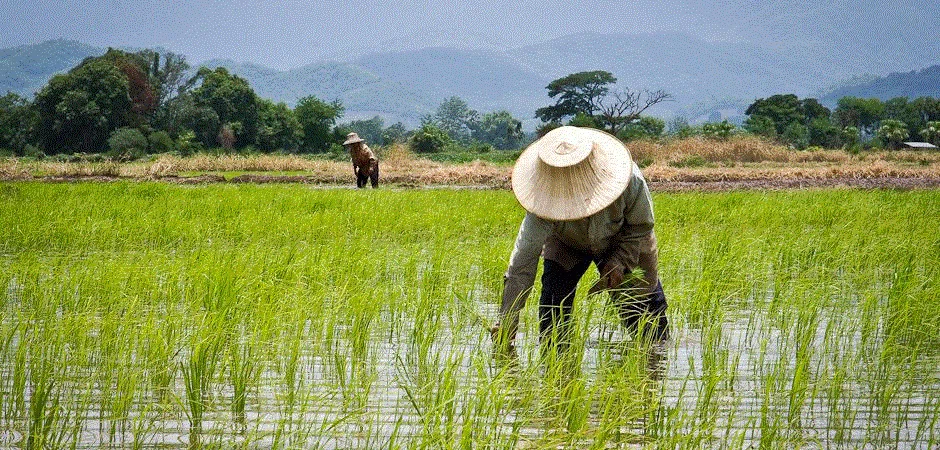
Nigeria has the land, the climate, and the people to feed itself and export, but farming here still feels like an uphill fight. From where I stand, the problems are less about Nigerians, not wanting to farm and more about the environment around farming, making it too risky and too expensive.
Insecurity and land access are two major factors affecting agricultural practices in the country. In many food-belt states, farmers can’t even access their farms consistently because of banditry, herder-farmer clashes, and kidnapping.
When your biggest risk is losing your life or your harvest to raiders, long-term investment like irrigation or tree crops doesn’t make sense. On top of that, land tenure is messy. Most land is still under customary ownership, so getting documented title to use as collateral for loans is hard.
Another factor is climate shocks and poor inputs.
Rainfall patterns have become unpredictable. Drought in the north, flooding in the south and middle belt, and shorter growing seasons are wiping out yields. At the same time, quality seeds, fertilisers, and agrochemicals are either too expensive or adulterated. A bag of fertiliser that should ordinarily cost N20,000, now sells for double that in some markets. So, smallholders cut rates and get lower yields.
Infrastructure gap is also a silent killer. Bad roads mean tomatoes rot before they get from Benue to Lagos states. No cold storage means gluts in harvest season and scarcity two months later. Erratic power means processing plants can’t run. Most rural areas still have little access to extension services, so farmers are using 1980s methods in a 2026 climate!
There are issues of finance and market risk. Banks see agriculture as high risk, so interest rates are 20% plus. Government loan programmes exist, but the bureaucracy kills them. Meanwhile, imported rice, wheat, and milk get subsidised elsewhere and then undercut local produce. Farmers produce, but they cannot predict prices. One season you’re rich, the next the market is flooded and you sell at a loss.
Policy inconsistency and urban bias is another. Policies swing with every administration. Anchor borrowers, border closures, fertiliser subsidies that come late. There’s also a cultural piece. For decades, farming was framed as “what you do when you fail school”. So, the brightest young people in Lagos and other cities chase tech and trade instead. Mechanisation is still low because of that perception and because tractors are expensive.
\Where I land on this: If we fixed just two things, insecurity and infrastructure, I think the rest would start to move. Secure farms mean people will invest. Good roads, plus storage, plus power, mean farmers can actually profit instead of just surviving. Climate adaptation and better inputs would then have a foundation to work on.
Agriculture won’t scale by slogans. It scales when a 25-year-old in Oyo or Kaduna states can borrow N2million, plant, harvest, and sell without fearing bandits or a broken bridge.
Now, let me ask, if you have to pick one bottleneck to fix first in Nigeria, would you go with security, roads, or finance?
 Active journalism costs huge sums of money. To ensure quality and rich agricultural journalism, the support of readers and friends of the publication is required. Donations can be made in Nigerian Naira (NGN). Kindly provide relevant information during transactions and be assured that funds received will be used judiciously and appropriately. For donation to FarmingFarmersFarms, kindly click the link below, call or send message to: +2348095451987.