
The Lagos Chamber of Commerce and Industry (LCCI), has urged the Federal Government to swiftly address the structural bottlenecks in food supply chains, as food inflation continues to exert significant pressure on household welfare.
This was contained in a press statement on Inflation Rebound, Business Presure, and Poverty Risks, issued by the Director-General of LCCI, Dr. Chinyere Almona.
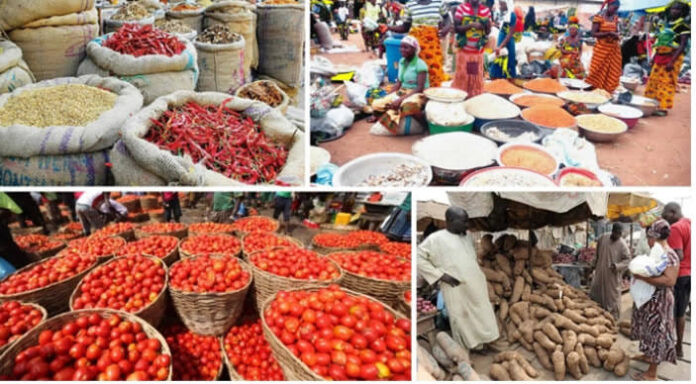
Almona noted that the body observed the uptick, largely driven by increase food inflation, 14.31% and transport cost, 16.9%, as well as a rise in core inflation to 16.21%, which reflects renewed underlying price pressure within the economy, saying that there is urgent need to strengthen agricultural productivity through improve access to input, mechanisation, irrigation, and rural infrastructure.
The DG added “Addressing insecurity in food-producing regions and reducing post-harvest losses through better storage and logistic system would help moderate food prices, stating that the recent approval of amendments to tariffs on some critical food items and agricultural inputs is a good first step, saying that this should be followed by other complementary interventions”.
The chamber stressed that rising costs have cascaded into higher prices across sectors, adding that government should accelerate investments in transport infrastructure, address inefficiencies in port operations, reduce multiple taxation and check points that increase the cost of moving goods.
The LCCI said that as exchange rate continues to drive imported inflation, particularly for manufacturers dependent on imported inputs, it recommends sustain efforts to improve foreign exchange liquidity, boost non-oil exports, and restore investor confidence through predictable and transparent foreign exchange policies, adding that with improve forex earnings from high crude oil prices, there should be a boost in the supply of foreign exchange for businesses to support critical imports.
The group called for promotion of local manufacturing through targeted incentives, improved access to credit, and stable policy frameworks, will reduce dependence imports and mitigate exposure to external shocks.
Almona emphasised that resurgence of inflationary pressures underscores the need for urgent, targeted, and sustained policy responses, noting that addressing the structural drivers of inflation, particularly in energy, food systems, logistics, and foreign exchange, will be critical to restoring price stability and supporting economic recovery.
 Active journalism costs huge sums of money. To ensure quality and rich agricultural journalism, the support of readers and friends of the publication is required. Donations can be made in Nigerian Naira (NGN). Kindly provide relevant information during transactions and be assured that funds received will be used judiciously and appropriately. For donation to FarmingFarmersFarms, kindly click the link below, call or send message to: +2348095451987.