
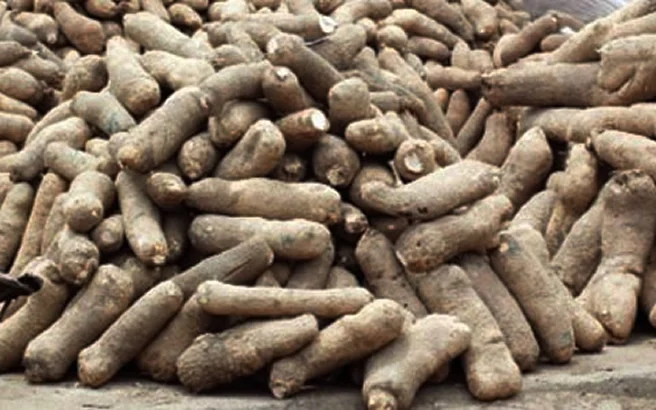
In a bid to bridge the over 50 million metric tonnes supply gap of yams, the Federal Government, in collaboration with the International Institute of Tropical Agriculture (IITA), has unveiled plans to increase national yam productivity from the current 10 metric tonnes to 30 metric tonnes yield per hectare.
The Minister of State for Agriculture and Food Security, Sabi Abdullahi, disclosed this in Abuja, during the National Yam Advocacy Summit convened by IITA, in partnership with the ministry, saying that Nigeria produces 67.2 million metric tonnes of yams yearly, accounting for 67% of global production.
He said that despite this impressive output, the country meets only part of its estimated national demand of 120 million metric tonnes, leaving a significant gap of over 50 million metric tonnes.
The shortfall, according to the minister, underscores the untapped potential of the sector and the urgent need to modernise the yam value chain, increase productivity, and leverage Nigeria’s leadership to capture greater domestic and international market opportunities. He said that the ministry is implementing several innovations to boost food production.
He commended IITA for advancing early generation seed production and improving propagation technologies, which have the potential to increase productivity by 70 to 140% while providing planting materials with low disease risk. He also reiterated the government’s commitment to supporting the future scaling of these innovations through sustainable seed production, engagement with yam seed companies, adoption of high-yielding and climate-resilient varieties, extension services, farmer training, and facilitation of access to finance, mechanisation, and structured aggregation.
In his remarks, the Director-General of IITA, Abdoulaiye Tahirou, stated that yams are an African crop, as 90% of production in the world is done in West Africa, with Nigeria and Ghana having the lion’s share.
He noted that IITA had conducted extensive research on yam improvement, particularly in breeding high-yielding and valuable varieties that are now being adopted across West African countries, saying that the progress recorded in yam breeding was made possible through partnerships with donors, who recognised the importance of investing in the crop. He specifically acknowledged the support of the Government of Japan for its yam programme, describing the contribution as instrumental to advancing research and development efforts.
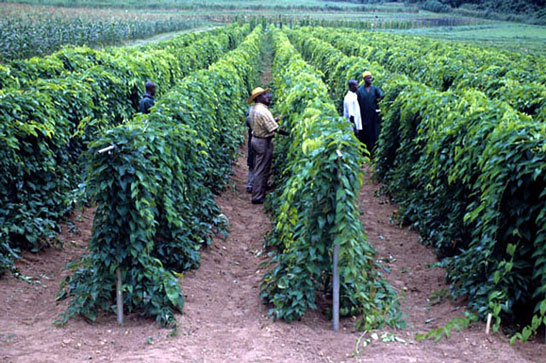
The DG, however, emphasised that improved varieties alone are insufficient without an efficient seed system to deliver quality planting materials to farmers.
Meanwhile, the National Orientation Agency (NOA) has cautioned traders and market operators across the country against hoarding food items and artificially inflating prices during the holy seasons of Ramadan fast and Lent.
The Director-General of NOA, Lanre Issa-Onilu, who spoke in Abuja, expressed concern over reports that some marketers are deliberately withholding essential commodities, commonly consumed during fasting periods to create artificial scarcity.
Issa-Onilu said the development, if not checked, would worsen the economic burden on ordinary Nigerians, who are already facing difficult times.
According to him, hoarding and excessive price increases during a sacred season, undermine the spirit of compassion and generosity that both Ramadan and Lent represent.
The DG, therefore, called on trade associations, market unions, and commodity groups to enforce discipline among their members.
He urged them to discourage exploitative practices and collaborate with relevant regulatory authorities to maintain ethical standards in the marketplace.
 Active journalism costs huge sums of money. To ensure quality and rich agricultural journalism, the support of readers and friends of the publication is required. Donations can be made in Nigerian Naira (NGN). Kindly provide relevant information during transactions and be assured that funds received will be used judiciously and appropriately. For donation to FarmingFarmersFarms, kindly click the link below, call or send message to: +2348095451987.