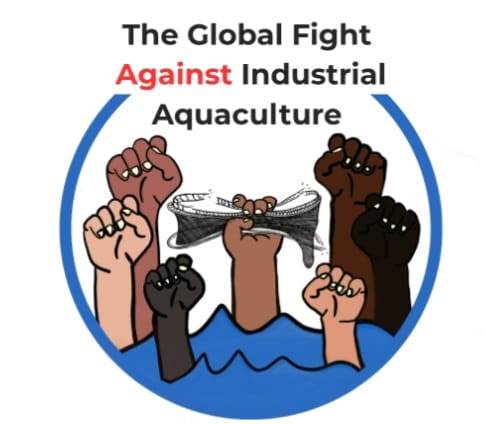
The World Forum of Fisher Peoples (WFFP) invites journalists and storytellers to a press forum to hear directly from leaders from the community, learn more about the struggle against an industry that destroys life, water and territory, as fishing communities are demanding that governments prioritise fishers rights, hold aquaculture corporations accountable, and invest in fishing communities, who have been feeding the world since time immemorial.
The Press Forum for Journalists and Storytellers, themed “The Future of the Fisheries”, takes place on September 11, 2026 at 8am Belize Time, 17 hours Central European Time (CET), and 20:30 hours Indian Standard Time (IST). In a statement, made available to FarmingFarmersFarms, ”When we talk about the fight for food sovereignty, our conversations are incomplete without the struggles of people living near our waterways. All across the world, fishing communities, who depend on the bounty of our seas and rivers for their livelihood and diet, are being displaced, threatened and even killed in their struggle against industrial aquaculture – large-scale farming of seafood for global consumption.
“Today, the ratio of farmed fish to wild fish can be as high as 5:1, meaning five pounds of wild forage fish are needed to produce a single pound of farmed fish. That is, food that is being taken away from people’s plates and fed to farmed fish. Many times, all that wild fish used for fishmeal ends up going to waste. Norway alone has had more than 20 farmed fish disasters ranging from uncontrollable sea lice to severe farm fish escapes into wild ecosystems, and mass death events in the last two years. Meanwhile, communities that have been historically self-reliant on their local fisheries are now food insecure due to the environmental contamination from the aquaculture industry”, it added.
Speakers at the press forum would include the Norwegian journalist and an award winning non-fiction writer, Simen Sætre, the author of “The New Fish”, a book published by Patagonia that tells the story of the origins of farmed salmon and the consequences of that action; former seafarer and now a scholar on global fisher peoples movements, Siddharth Chakravarty, who holds a PhD from the Queen Mary University of London, focused on the political economy of the Indian seafood industry, and an affiliate at the university’s Centre of Labour, Sustainability and Global Production.
Others are the indigenous fisherwoman and popular educator, Arlene Oliveira da Costa. She is the Coordinator for the National Articulation of Fisherwomen, the youth (wing of the) Movement of Artisanal Fishers of Brazil, the Movement of Fish Harvesters of Sergipe and President of the Association of Fisherwomen and Fish Harvesters of Porto do Mato since 2011; and the Co-Chair of the World Forum of Fisher Peoples and an officer within the Caribbean Network of Fisheries Organizations, which represents hundreds of fisher peoples in the Caribbean, Nadine Nembhard.
This programme, which is to take place right after the United Nations Food and Agriculture Organisation’s Committee on Fisheries (COFI) meeting in Rome, Italy, is to determine the world’s agreements around fisheries and aquaculture, and be moderated by the Communications Officer, World Forum of Fisher Peoples, Este Narváez. Each panelist is expected to share stories in a 45 minute-moderated conversation, followed by the question and answer session. Total runtime would be 90 minutes. The discourse would further provide an opportunity to explore the untold stories of fishing communities, sea fearers, and those who are proposing solutions for an abundant and prosperous future for the world’s fisheries. Further enquiries can be made via, este@namanet.org
 Active journalism costs huge sums of money. To ensure quality and rich agricultural journalism, the support of readers and friends of the publication is required. Donations can be made in Nigerian Naira (NGN). Kindly provide relevant information during transactions and be assured that funds received will be used judiciously and appropriately. For donation to FarmingFarmersFarms, kindly click the link below, call or send message to: +2348095451987.