
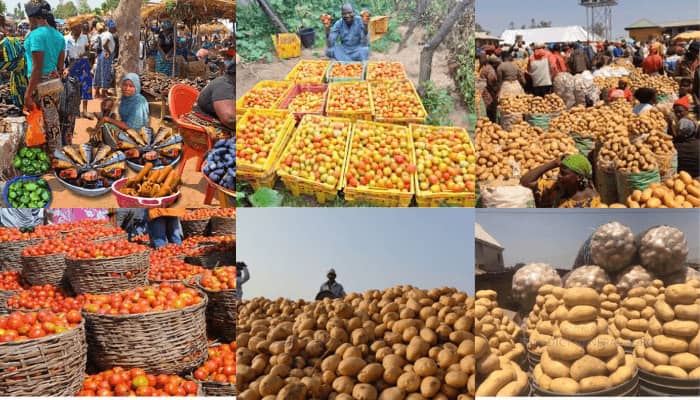
The National Bureau of Statistics (NBS) has reported that food inflation rose in February to 12.12%, reversing from its first single-digit win in January, on the back of rising prices of food in markets.
The NBS reported that this increase comes as a result of a renewed spike in food prices like cassava, beans, yams, and crayfish, basically food staples in the Nigerian diets.
However, while food inflation rose, headline inflation eased further to 15.06% in the period, down from 15.10% in January, defying the usual trend of food inflation directly driving headline inflation.
On a month-on-month basis, food inflation rose by 0.80%, its first monthly increase in over three months.
“The food inflation rate in February 2026 was 12.12% on a year-on-year basis. This was 14.86% points lower compared to the rate recorded in February 2025 (26.98%)”, the NBS reported.
A breakdown of the data shows that prices of food and non-alcoholic beverages rose by 6.03% year on year, while housing, water, electricity, gas and other fuels climbed 1.27%, transport rose 1.61%, restaurants and accommodation services increased 1.95%, and health surged by 0.91%.
The February food inflation reading defies several projections by analysts and research firms, who projected that a decline in food inflation would occur on the back of ongoing government interventions.
A market survey indicates that food prices have remained relatively stable since the beginning of the year, although experts warn that the expanding war between Iran and the United States could lead to a surge in the coming months.
On a state level, Kogi recorded the highest rise in food inflation at 26.91%, followed by Adamawa at 23.12% and Benue 21.89%, while Katsina, Bauch, and Imo recorded the slowest rise in the period at 5.09%, 7.09%, and 7.65%, respectively.
 Active journalism costs huge sums of money. To ensure quality and rich agricultural journalism, the support of readers and friends of the publication is required. Donations can be made in Nigerian Naira (NGN). Kindly provide relevant information during transactions and be assured that funds received will be used judiciously and appropriately. For donation to FarmingFarmersFarms, kindly click the link below, call or send message to: +2348095451987.