
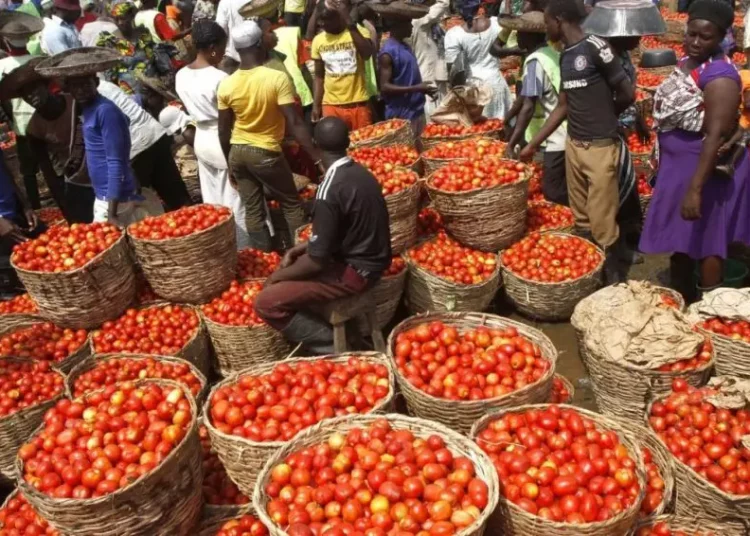
Farmers have lost nearly N5 trillion in productive capital over the past two years due to policy-induced price crashes, poor and misleading weather forecasts by the Nigerian Meteorological Agency (NiMet), and severe market distortions.
The Foundation for Peace Professionals (PeacePro) revealed this in a statement, saying the country’s agriculture sector is drowning in a deep structural crisis.
The Executive Director of the group, Abdulrazaq Hamzat, described the losses as direct agricultural capital destruction at the producer level, stressing that the estimate does not include secondary economic effects such as consumer inflation, Gross Domestic Product, (GDP) contraction, foreign exchange pressure, or security-related costs.
“Those impacts come later. What has already happened is the liquidation of farmer capital”, the statement said.
Farmers allegedly lost grip on food prices in 2024-2025 due to poorly-timed policy interventions, price suppression mechanisms, weak market coordination, and unreliable weather forecasting by NiMet, which forced farmers to sell produce below cost, wiping out the capital required to sustain future production cycles.
“This was not a market correction. It was a policy shock that transferred value away from producers”, the statement added.
While Nigeria has an estimated 38-40 million people engaged in agriculture, the group stressed that the most severe damage was concentrated among market-facing producers, not subsistence farmers.
“The most affected group includes six – eight million producers, small and medium-scale commercial farmers, storage-poor price-taking producers, farmers engaged in grains, tubers, vegetables, and legumes. These producers supply Nigeria’s urban and regional food markets”, the statement reads.
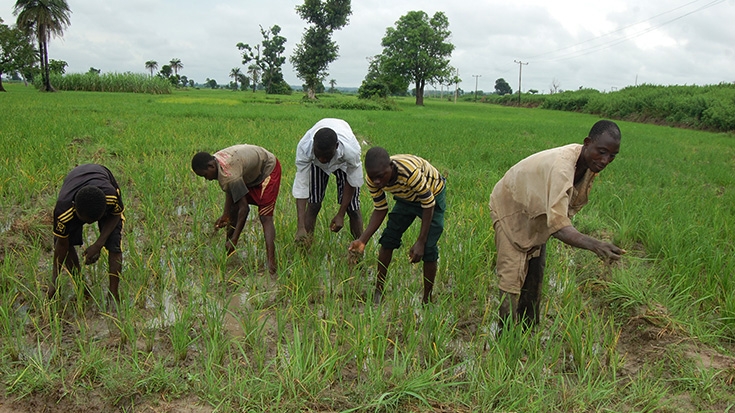
The group maintained that the scale of destruction is comparable to a financial sector collapse, with one critical difference.
“This crisis did not happen in banks or stock markets. It happened quietly, in farms and rural communities”.
Hamzat raised concerns that depleted farmer capital will inevitably lead to reduced planting in 2026, lower domestic food supply, higher future food prices, increased rural poverty, and social instability.
PeacePro urged authorities to publicly acknowledge the scale of agricultural capital destruction and immediately shift policy away from short-term price suppression toward producer protection, capital preservation, and market stability.
“No country can bankrupt its farmers and remain food secure, and Nigeria will soon pay the price for policy decisions that treat farmers as shock absorbers for inflation, if not corrected on time”, the group added.
 Active journalism costs huge sums of money. To ensure quality and rich agricultural journalism, the support of readers and friends of the publication is required. Donations can be made in Nigerian Naira (NGN). Kindly provide relevant information during transactions and be assured that funds received will be used judiciously and appropriately. For donation to FarmingFarmersFarms, kindly click the link below, call or send message to: +2348095451987.